
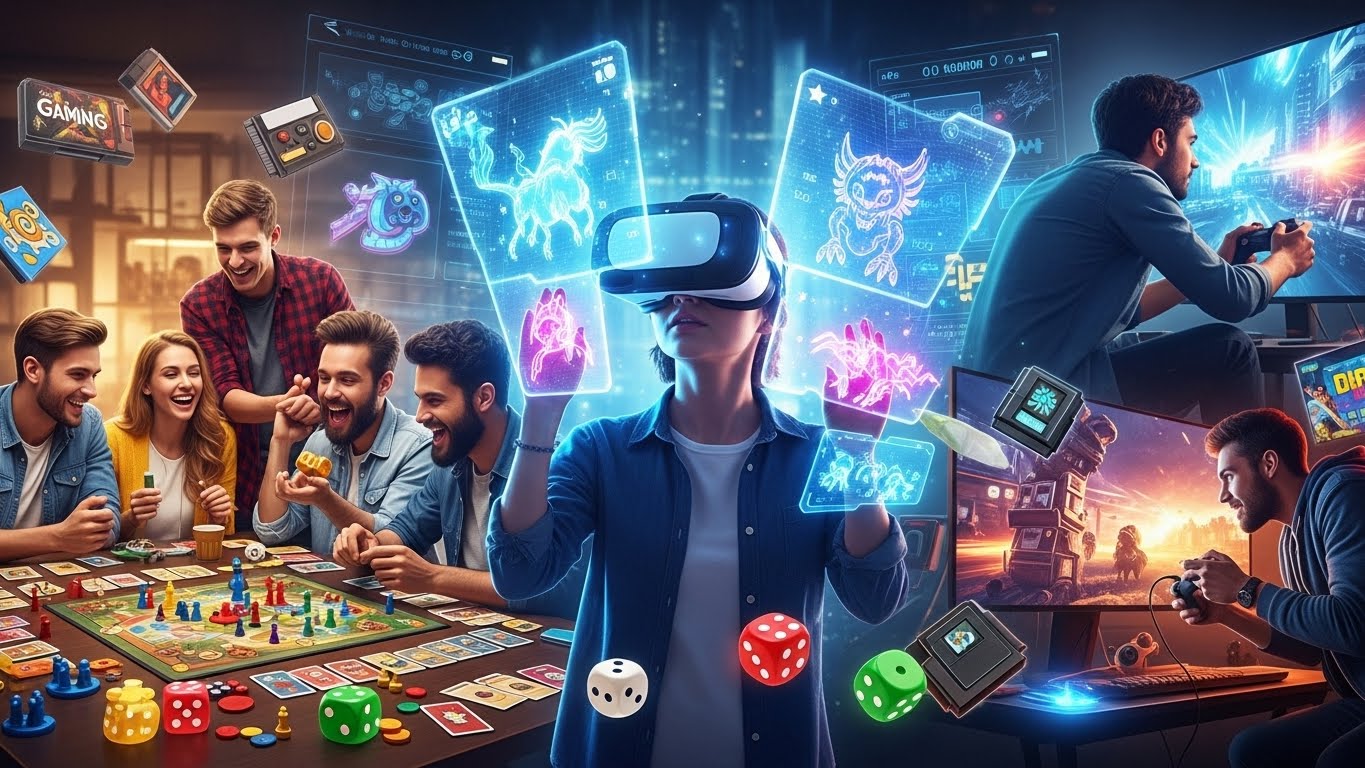
Gaming has always been a cornerstone of entertainment, with an enduring legacy that spans several decades. What began as a niche hobby for a few has now become a global cultural phenomenon. From the days of pixelated characters and simple sound effects to today’s immersive virtual realities and lifelike graphics, the gaming landscape has undergone a monumental transformation. This journey is a testament to human innovation, creativity, and the pursuit of escapism. In this blog post, we will explore the evolution of gaming, examining its history, its impact on society, and where it’s headed in the future.
The Humble Beginnings of Video Gaming
The Birth of an Industry
The 1970s marked the birth of video gaming as a mainstream entertainment medium. In 1972, the arcade game Pong was released by Atari, a simple yet groundbreaking game that simulated table tennis. Pong became an instant hit, and thus the video game industry was born. This era was dominated by arcade games, where players would insert coins into machines for a few minutes of gameplay. These early games were a far cry from today’s expansive titles, with limited graphics and rudimentary mechanics. However, they laid the foundation for the video game industry’s explosive growth in the decades that followed.
The Rise of Home Consoles
As the 1980s approached, home consoles began to gain traction. The Atari 2600, released in 1977, was one of the first widely successful home consoles, bringing games directly into living rooms. Around the same time, video games became a cultural fixture with titles like Space Invaders, Asteroids, and Pac-Man taking over arcades worldwide. These early titles were simplistic by today’s standards, but they introduced millions of people to gaming, establishing the concept of video games as an entertainment medium for all ages.
The Golden Age of Gaming
The 8-bit and 16-bit Era
The late 1980s and early 1990s ushered in a golden era for video gaming, defined by the rise of the 8-bit and 16-bit consoles. The Nintendo Entertainment System (NES), released in 1985, and the Sega Genesis, released in 1989, were pivotal in the success of home gaming. Games like Super Mario Bros., The Legend of Zelda, and Sonic the Hedgehog not only set the bar for platformers and action games but also established iconic characters that are still beloved today.
During this period, gaming became more complex. The graphics, though still limited compared to modern games, were vastly improved, and developers began to experiment with deeper storytelling and more intricate gameplay mechanics. The success of franchises like Final Fantasy and Metroid demonstrated that games could offer much more than simple action; they could tell compelling stories and offer rich, immersive experiences.
The Evolution of the Arcade Scene
While home consoles were on the rise, arcades continued to thrive throughout the 80s and into the early 90s. The arcade scene became a cultural touchstone, with players competing for high scores and enjoying social experiences with friends. Fighting games like Street Fighter II and Mortal Kombat dominated the arcade scene, offering players the chance to compete head-to-head in intense, button-mashing battles.
Though arcades would eventually fade into the background with the advent of more powerful home consoles, their influence on game design and the gaming community remains undeniable. The arcade era taught developers the importance of tight, challenging gameplay, which would go on to shape some of the best video games ever made.
The 3D Revolution
Entering the 3D Age
The late 1990s marked a revolutionary shift in gaming: the transition from 2D to 3D graphics. The introduction of the Sony PlayStation in 1994, and later the Nintendo 64 in 1996, brought the world of video games into the third dimension. These consoles featured groundbreaking titles like Super Mario 64, Crash Bandicoot, and Final Fantasy VII, which allowed players to explore vast, three-dimensional environments for the first time.
The leap from 2D to 3D was not just a graphical improvement; it changed the way games were designed and played. Movement in three dimensions introduced new possibilities for level design, character interaction, and storytelling. The world of gaming expanded beyond simple side-scrolling adventures and top-down shooters into immersive 3D environments, where players could fully explore vast worlds.
The Rise of Online Gaming
As technology continued to evolve, online gaming emerged as a significant part of the gaming landscape in the early 2000s. While multiplayer gaming had existed in a limited form before, the internet allowed players to connect with others across the globe. The advent of broadband internet and more powerful gaming consoles, like the Xbox and PlayStation 2, paved the way for games like Halo 2, World of Warcraft, and Counter-Strike, which allowed millions of players to engage in competitive or cooperative experiences from the comfort of their homes.
Online gaming not only expanded the scope of gameplay but also fostered new communities. The social aspect of gaming took center stage, with players forming guilds, clans, and teams to compete against one another. This era marked the beginning of esports as we know it today, where professional gaming competitions attract millions of viewers and offer lucrative prizes.
The Modern Era of Gaming
High-Definition Graphics and Open-World Games
In the 2010s, gaming saw a dramatic leap forward in both graphical fidelity and game design. The advent of high-definition graphics and the arrival of next-generation consoles like the PlayStation 4 and Xbox One made games look more lifelike than ever before. Open-world games like The Witcher 3: Wild Hunt, Grand Theft Auto V, and The Legend of Zelda: Breath of the Wild pushed the boundaries of what was possible in terms of world-building, allowing players to explore vast, richly detailed worlds filled with dynamic events and characters.
These games embraced a more immersive form of storytelling, with narratives that were often as complex and emotionally engaging as those found in books and movies. Players could now lose themselves in fully realized worlds, making choices that impacted the story and the game world itself. This era also saw the rise of games as a form of artistic expression, with developers using the medium to explore themes of identity, morality, and existentialism.
Mobile Gaming and the Rise of Casual Gamers
Alongside traditional gaming platforms, mobile gaming became a force to be reckoned with. With the proliferation of smartphones, games like Angry Birds, Candy Crush Saga, and Pokémon GO reached millions of people who had never considered themselves gamers before. These games were designed to be accessible, with easy-to-understand mechanics and short, engaging gameplay sessions. Mobile gaming introduced a new wave of casual gamers who might play for a few minutes during their daily commute or while waiting in line at the store.
While mobile games are often simpler than their console or PC counterparts, they have carved out their own niche in the gaming landscape. The accessibility of mobile gaming has expanded the reach of video games to a broader demographic, making gaming a part of everyday life for people across the globe.
The Future of Gaming: Virtual Reality and Beyond
Virtual Reality: The Next Frontier
Looking ahead, the future of gaming lies in technologies like virtual reality (VR) and augmented reality (AR). VR has already made waves with devices like the Oculus Rift and PlayStation VR, offering players the chance to step inside a game’s world and experience it in a fully immersive, 360-degree environment. VR allows for unparalleled immersion, with players feeling like they are truly part of the game world, whether they’re battling alien invaders or exploring fantastical landscapes.
As VR technology continues to improve, we can expect even more lifelike experiences, with better graphics, more intuitive controls, and more diverse gameplay options. In the future, we may even see full-body haptic feedback suits, allowing players to physically feel the actions and events occurring in the game.
Cloud Gaming and the Death of Consoles?
Cloud gaming is another emerging technology that has the potential to reshape the gaming landscape. Services like Google Stadia, NVIDIA GeForce Now, and Xbox Cloud Gaming allow players to stream games directly to their devices without the need for powerful hardware. This could eliminate the need for expensive consoles or gaming PCs, as the heavy processing is done remotely, on powerful servers.
As internet speeds continue to increase, cloud gaming could become the dominant way people play games, leading to a more accessible and affordable gaming experience for everyone. The potential for instant access to any game, anywhere, on any device is an exciting prospect, and it could make gaming more inclusive than ever before.
Conclusion: The Ever-Expanding World of Gaming
The world of gaming has come a long way since the days of Pong and pixelated graphics. What started as a simple pastime has evolved into a rich, multifaceted industry that offers something for everyone. From casual mobile games to sprawling, open-world adventures, gaming has become an integral part of modern culture, with millions of people worldwide spending hours immersed in virtual worlds.
As technology continues to advance, the possibilities for gaming are virtually limitless. The future holds exciting new experiences in virtual reality, cloud gaming, and beyond, promising even more immersive and accessible gaming experiences. One thing is certain: the world of gaming will continue to evolve, and players will always find new ways to engage with the interactive entertainment medium that has captured the imaginations of millions for decades.