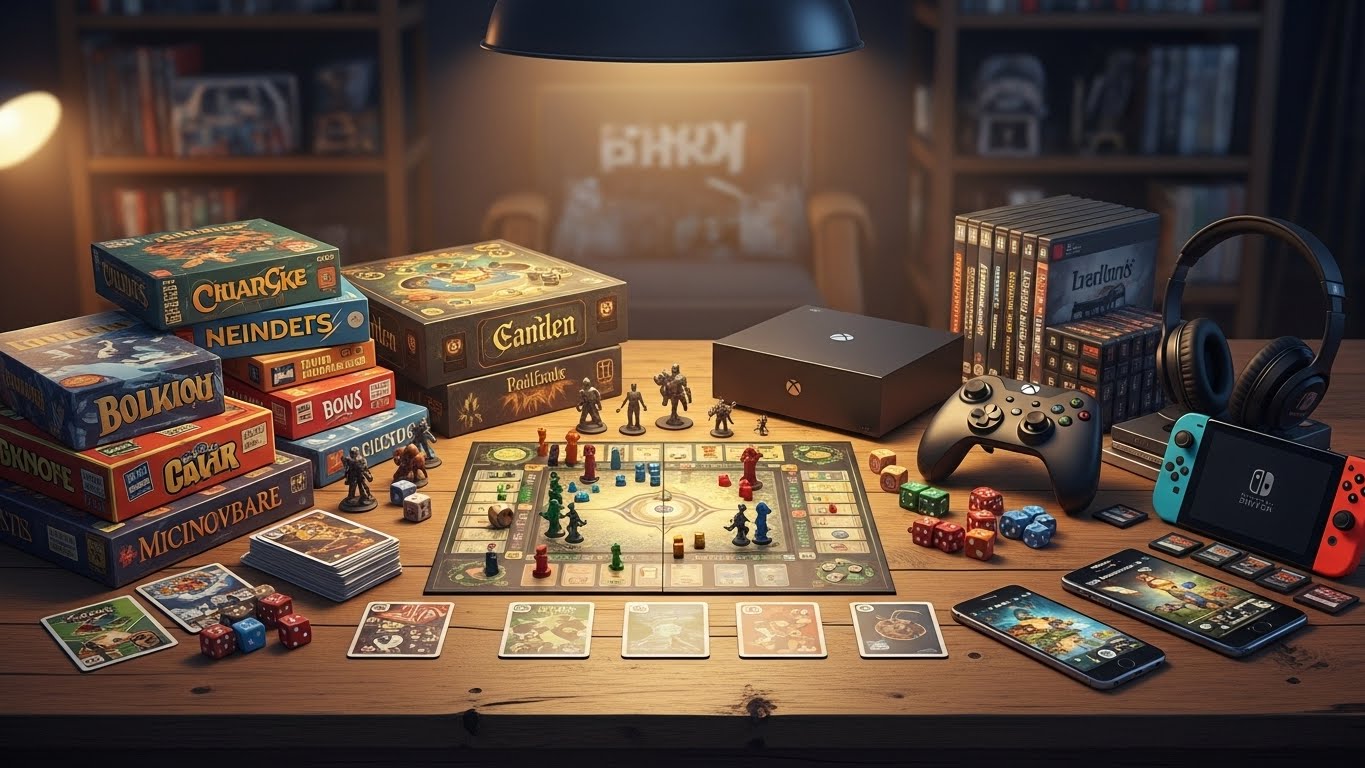
In the modern era, gaming has evolved far beyond its humble origins as a simple pastime. Once considered a niche hobby, video games have transformed into a global cultural phenomenon, shaping entertainment, technology, and social dynamics. Today, gaming encompasses a vast array of genres, platforms, and experiences, offering something for every type of player. Whether you’re a casual gamer, a competitive esports enthusiast, or a fan of immersive single-player stories, the world of gaming has something to offer. In this blog post, we will delve into the evolution of gaming, explore the diverse types of games available, and examine the impact gaming has on both individuals and society.
The Evolution of Gaming: From Arcade to Immersive Worlds
The history of video games is rich and varied, dating back to the 1950s and 1960s when the first experiments with computer games were conducted. Early games were simplistic by today’s standards, with titles like Tennis for Two and Spacewar! laying the groundwork for future developments. However, it wasn’t until the 1970s and 1980s, with the advent of arcade machines, that gaming began to enter the public consciousness.
The release of Pong in 1972 marked the beginning of the commercial video game industry. This simple two-player game, where players controlled paddles to hit a ball back and forth, became an instant hit in arcades across the world. This laid the foundation for a new form of entertainment, and soon after, home consoles like the Atari 2600 allowed players to enjoy games in the comfort of their own homes.
Throughout the 1990s and 2000s, the gaming industry continued to evolve rapidly, with the rise of 3D graphics, more powerful consoles, and online multiplayer gaming. The introduction of the Sony PlayStation, Nintendo 64, and Microsoft Xbox brought a new level of sophistication to games, with titles like Super Mario 64, Final Fantasy VII, and Halo becoming iconic in the gaming community.
Today, gaming has reached unprecedented heights, with photorealistic graphics, complex narratives, and vast open worlds. Titles like The Witcher 3: Wild Hunt and Red Dead Redemption 2 have redefined what’s possible in terms of storytelling, world-building, and player freedom. Furthermore, the rise of mobile gaming and virtual reality (VR) has opened up entirely new dimensions of gaming experiences.
Types of Games: A Diverse Universe of Experiences
One of the most exciting aspects of gaming today is the sheer diversity of genres available. Whether you enjoy solving puzzles, competing against others in fast-paced action, or escaping into fantastical worlds, there is no shortage of options. Here, we explore some of the most popular and influential genres in gaming.
1. Action and Adventure Games
Action and adventure games are the backbone of the gaming industry. These games typically feature fast-paced gameplay, exploration, and combat mechanics. Players are often tasked with navigating through immersive environments while engaging in battles, solving puzzles, and completing objectives.
Iconic franchises like The Legend of Zelda, Uncharted, and Assassin’s Creed have defined the action-adventure genre, offering players a mix of combat, exploration, and storytelling. The Legend of Zelda: Breath of the Wild, for example, is praised for its open-world design, where players can explore a vast kingdom, solve puzzles, and fight enemies in an expansive environment.
2. Role-Playing Games (RPGs)
Role-playing games are known for their deep narratives, character progression, and immersive worlds. In RPGs, players typically take on the role of a protagonist (or sometimes a team of characters) and embark on a journey through a story-driven experience. The genre has evolved over the years, ranging from turn-based combat systems to real-time action gameplay.
Popular RPGs like The Elder Scrolls V: Skyrim, Final Fantasy, and Mass Effect have garnered massive fan bases due to their detailed worlds, character customization, and rich lore. These games often feature branching storylines, where player choices influence the narrative outcome, adding a layer of replayability.
3. Simulation Games
Simulation games offer players the opportunity to control virtual environments and systems, often mimicking real-world activities. These games can be incredibly detailed and realistic, allowing players to manage everything from a farm to a city or even an entire society.
Games like The Sims, SimCity, and Farming Simulator have garnered large followings for their ability to offer relaxing and engaging experiences. Players can experiment with different strategies, build and manage virtual spaces, and often live out fantasies in a low-stakes, non-competitive environment.
4. First-Person Shooters (FPS)
First-person shooters are one of the most popular genres in gaming, known for their fast-paced action and competitive gameplay. These games immerse players in a first-person perspective, where they control a character’s movements and engage in shooting mechanics, often in military or sci-fi settings.
Games like Call of Duty, Halo, Counter-Strike, and Overwatch have helped define the FPS genre, with a focus on precision shooting, team-based combat, and strategy. Online multiplayer modes are a significant component of FPS games, with players engaging in intense PvP (player versus player) battles, which have led to the rise of esports competitions.
5. Strategy Games
Strategy games require players to plan, manage resources, and think critically to achieve objectives, often in a competitive or tactical environment. These games can range from turn-based strategy (TBS) to real-time strategy (RTS) and even grand strategy games that simulate entire historical periods.
Age of Empires, StarCraft, and Civilization are notable examples of strategy games, where players must balance resource management, military tactics, and diplomacy to succeed. Strategy games can be incredibly challenging, requiring players to think several moves ahead, similar to a game of chess.
6. Sports and Racing Games
Sports and racing games are among the most popular genres for both casual and hardcore gamers. These games focus on simulating real-world sports or racing events, often offering a mix of arcade-style action and realistic physics.
Franchises like FIFA, NBA 2K, and Gran Turismo have become household names, allowing players to control teams, athletes, and vehicles in a wide variety of sports, from football and basketball to motorsports. These games often feature both single-player modes and multiplayer online play, where players can compete against others globally.
7. Puzzle and Indie Games
Puzzle games challenge players’ logic, problem-solving skills, and creativity. These games are often simpler in terms of graphics and mechanics but offer a deeply satisfying experience as players work through intricate puzzles and obstacles.
Indie games, typically developed by small teams or solo developers, often feature unique and experimental gameplay mechanics. Games like Tetris, Portal, and The Witness are examples of puzzle games that have become iconic due to their innovative design and compelling puzzles.
The Impact of Gaming on Society and Culture
Gaming has long been more than just a form of entertainment. It has evolved into a cultural phenomenon with far-reaching impacts on society. From fostering online communities to driving technological innovation, gaming has reshaped the way people interact with media and technology.
1. Social Connections and Online Communities
One of the most significant effects of gaming is the creation of online communities. Multiplayer games, particularly in genres like MMOs (Massively Multiplayer Online games) and battle royale games, have allowed people from all corners of the world to connect, collaborate, and compete. Players can form friendships, join guilds, and even participate in virtual economies.
Games like World of Warcraft and Fortnite have brought together millions of players, creating virtual spaces where socialization, teamwork, and communication are integral components of the gameplay experience. These communities often extend beyond the games themselves, with players forming real-life friendships and organizing gaming-related events, like esports tournaments or fan conventions.
2. Esports: The Rise of Competitive Gaming
Esports, or electronic sports, has grown into a billion-dollar industry. What was once a small niche of competitive gaming has blossomed into a global phenomenon, with professional leagues, large-scale tournaments, and corporate sponsorships.
Games like League of Legends, Dota 2, and Counter-Strike: Global Offensive have become staples of the esports landscape, with players earning millions in prize money and sponsorship deals. Major esports tournaments, like The International for Dota 2 or the League of Legends World Championship, attract millions of viewers worldwide, similar to traditional sports events.
3. Educational and Therapeutic Applications of Gaming
Beyond entertainment, games have found applications in education and therapy. Serious games, which are designed for educational purposes, are being used in classrooms to teach subjects like math, history, and science. Games like Minecraft have also been used in educational settings to foster creativity and teamwork.
Additionally, gaming has therapeutic applications. Research has shown that certain games can be used to help patients with physical or cognitive impairments. For example, games designed to improve hand-eye coordination, memory, and problem-solving skills are being used in rehabilitation centers and mental health therapy.
4. Gaming and Creativity
Video games are also powerful tools for creative expression. Game development itself is an art form, and many players enjoy creating their own games, levels, or mods using tools provided by game studios. Games like Minecraft, LittleBigPlanet, and Super Mario Maker have empowered players to design their own worlds and share them with others.
The artistic elements of games, from visual design to narrative structure and music, have also influenced other forms of entertainment, such as film and television. As gaming continues to evolve, it increasingly blurs the line between traditional art forms and digital entertainment.
The Future of Gaming: What Lies Ahead?
The future of gaming is incredibly exciting, with continuous advancements in technology and gameplay design. Virtual reality (VR) and augmented reality (AR) are likely to play a more significant role, allowing players to fully immerse themselves in digital worlds. Cloud gaming, which enables players to stream games directly to their devices without needing powerful hardware, could make gaming more accessible than ever.
As the gaming industry continues to grow, it will undoubtedly bring about new trends, innovations, and opportunities. Whether you’re a casual player or a dedicated gamer, the world of gaming will continue to captivate and inspire millions across the globe for years to come.
Conclusion
The world of gaming is vast, varied, and constantly evolving. From action-packed adventures to strategy-heavy simulations, video games offer a wealth of experiences that appeal to people of all ages and backgrounds. As the gaming industry continues to innovate and expand, its impact on society, technology, and culture will only become more profound. Whether you’re looking for entertainment, social interaction, or creative expression, there’s no denying that gaming has become an integral part of modern life.