
Introduction: Games as More Than Entertainment
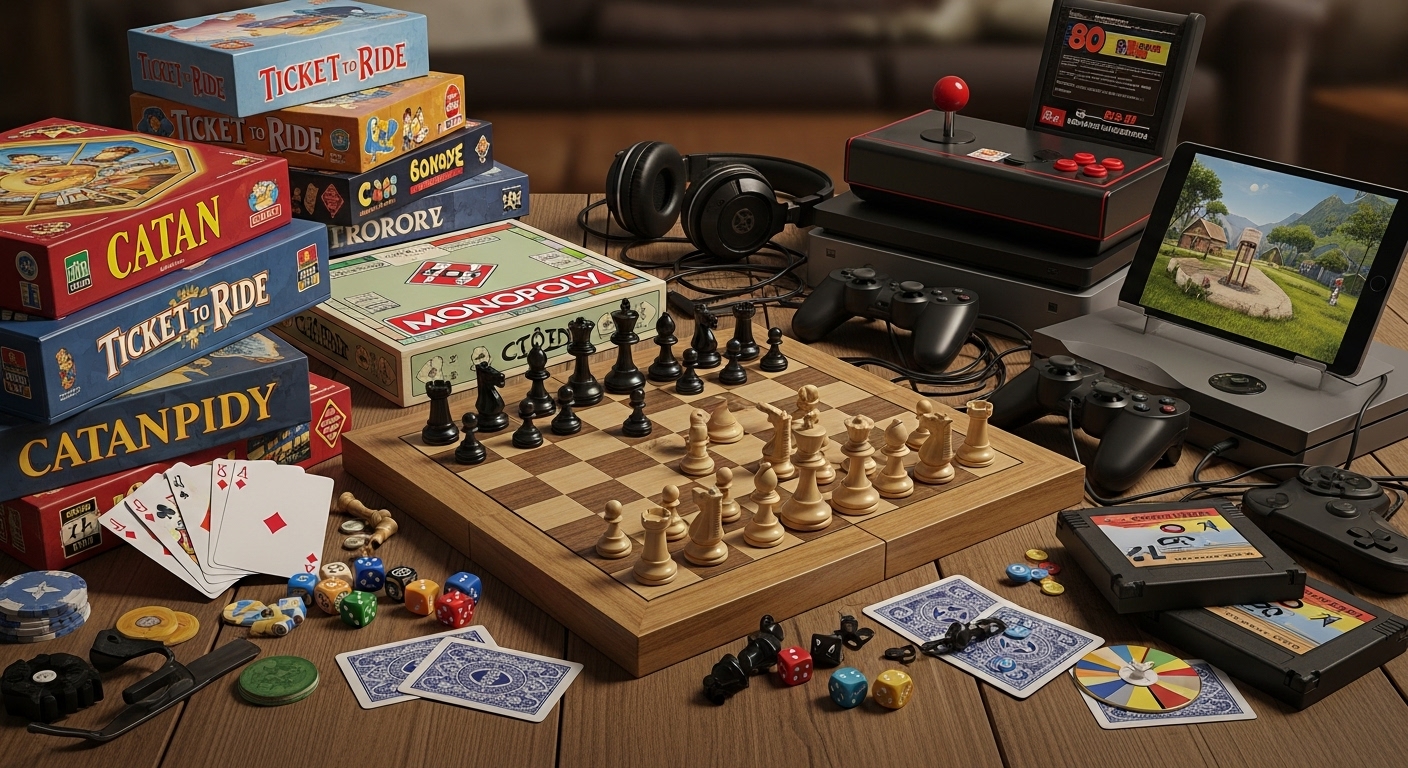
Games have always been a cornerstone of human culture, serving not only as a source of entertainment but also as tools for learning, socialization, and creative expression. Whether in the form of board games, video games, or even physical activities, games provide a unique space where rules are crafted, and players can experience the satisfaction of both challenge and reward. Over the years, the landscape of gaming has expanded far beyond traditional confines, introducing innovative mechanics and immersive experiences that continue to redefine the world of play.
As gaming evolves, it becomes more inclusive and diverse, offering players of all ages and backgrounds experiences that are engaging, educational, and often transformative. In this post, we explore the fascinating world of games, from the inventive spirit behind board games to the limitless possibilities of digital gaming and the ways technology is shaping the future of interactive entertainment.
The Renaissance of Board Games: A New Era of Strategy and Storytelling
While digital gaming often takes the spotlight, the resurgence of interest in board games deserves attention. Modern board games have become sophisticated, offering players not just competition but rich narratives, strategic depth, and immersive worlds. Games like Gloomhaven, Terraforming Mars, and Wingspan exemplify this evolution, combining intricate mechanics with storytelling and a sense of progression that keeps players coming back.
Gloomhaven, for example, blends tactical combat with a living world where every decision influences the outcome. The game evolves as players make choices, creating a unique experience each time it is played. Terraforming Mars, another example, challenges players to work together or compete to terraform a distant planet, blending strategic gameplay with environmental storytelling. Wingspan, on the other hand, takes players into the natural world of birds, offering an educational yet deeply strategic experience.
These games demonstrate that the modern board game is far more than just a way to pass time. It’s an art form that combines creativity with strategy, and its growing popularity is a testament to its enduring appeal.
Video Games: The Artistic and Narrative Potential
The world of video games has seen a transformation over the past few decades. Once viewed purely as a form of entertainment, games are now considered a legitimate art form, capable of telling complex stories, evoking deep emotions, and even changing perceptions. From the groundbreaking work of The Last of Us to the artistic exploration in Journey, video games have evolved into experiences that challenge and engage on multiple levels.
Journey, developed by Thatgamecompany, stands out for its minimalist approach, focusing on visual storytelling and emotional connection. The game’s stunning art direction, combined with a hauntingly beautiful soundtrack, immerses players in a vast desert landscape where the story unfolds without a single word of dialogue. The experience is about connection—both with the game world and with other players, who may cross paths briefly during the journey.
On the opposite end, games like The Last of Us and Red Dead Redemption 2 use cutting-edge graphics and complex narratives to explore deeply human themes. These games push the boundaries of storytelling in gaming, often blurring the line between film and interactive entertainment. By weaving character-driven stories with player choice, these games create a level of emotional depth rarely seen in other forms of media.
The Power of Immersion: Virtual Reality and Augmented Reality
As technology continues to evolve, so too does the potential for new ways to experience games. Virtual reality (VR) and augmented reality (AR) have taken immersive gaming to a new level, offering players an opportunity to fully interact with digital worlds or blend the real world with virtual experiences.
VR games like Half-Life: Alyx have set a new standard for immersion. By allowing players to interact physically with the game environment, VR takes immersion to an entirely new level. Players can move around, manipulate objects, and interact with characters, all while feeling as if they are truly a part of the game world. The sense of presence in VR is unlike any other form of gaming, making it one of the most exciting developments in recent years.
On the other hand, augmented reality has brought games like Pokémon Go into the mainstream. By combining digital characters with real-world environments, AR encourages players to step outside and explore their surroundings. It adds a layer of interaction that blends the virtual and physical worlds, creating a truly unique gaming experience.
Indie Games: The Heart of Innovation
While large studios often produce high-budget titles that focus on mass appeal, indie developers have become the unsung heroes of gaming innovation. With smaller teams and fewer resources, indie developers are free to take risks, experiment with gameplay mechanics, and tell unique stories that might not fit into the mainstream mold. These games often push boundaries and introduce novel ideas that larger studios may avoid.
Games like Hades, Celeste, and Undertale showcase the creativity and passion of indie developers. Hades blends rogue-like gameplay with an engaging narrative that evolves as players continue to fight their way through the underworld. The game’s success is due in part to its tight gameplay mechanics and its ability to tell a compelling story through dialogue, character development, and player choice.
Similarly, Celeste offers an emotionally resonant story about overcoming mental health challenges, using challenging platforming mechanics as a metaphor for personal growth. Undertale, on the other hand, turns traditional RPG conventions on their head by allowing players to choose between combat and diplomacy, making every choice meaningful in the context of the narrative.
Indie games like these are a testament to the fact that creativity often thrives in smaller, more intimate settings. They remind us that innovation in gaming is not just about graphics or scale—it’s about ideas, stories, and gameplay that challenge traditional norms.
The Educational Value of Games
While games are often associated with entertainment, many also have educational value. From teaching problem-solving and strategy to fostering teamwork and critical thinking, games can be powerful tools for learning. This is especially true in the realm of simulation games, which provide players with realistic experiences in fields like aviation, architecture, or even space exploration.
Games like Kerbal Space Program teach players about physics and engineering by allowing them to build and launch rockets in a sandbox environment. Players learn about orbital mechanics, rocket design, and space travel by trial and error—an educational experience that is as fun as it is informative.
Similarly, games like SimCity and Cities: Skylines offer players the chance to design and manage entire cities, teaching principles of urban planning, economics, and resource management. These types of games can be used in classrooms to teach students about complex systems, decision-making, and the consequences of their actions.
The Role of Multiplayer Games in Social Connection
Multiplayer games have become a global phenomenon, allowing players to connect with others around the world. Whether through cooperative experiences or competitive gameplay, these games provide a platform for social interaction, teamwork, and competition.
Games like Among Us, Minecraft, and Fortnite have transformed gaming into a social activity. Among Us, with its emphasis on communication and deception, encourages players to work together while trying to unmask a traitor in their midst. Minecraft allows players to build and explore together, creating a collaborative world full of possibilities. Fortnite brings players into a battle royale environment, where they can test their skills against others in fast-paced action.
Multiplayer games have the power to foster friendships, create communities, and offer shared experiences. They break down geographical barriers, enabling players from different cultures and backgrounds to interact and collaborate in ways that were previously impossible.
The Future of Gaming: Expanding Horizons
As technology advances, the future of gaming looks incredibly promising. The integration of artificial intelligence, cloud gaming, and further advancements in VR and AR will continue to redefine what games can offer. We may soon see games where entire worlds are procedurally generated in real-time, where the narrative adapts seamlessly to every decision, and where the boundaries between physical and digital play are blurred even further.
Moreover, as the gaming industry becomes more inclusive, we are likely to see a greater emphasis on accessibility, allowing more players, including those with disabilities, to enjoy the full range of gaming experiences. Features such as customizable controls, colorblind modes, and adaptive difficulty settings are just the beginning of making games more accessible for everyone.
Conclusion: The Enduring Appeal of Games
Games are more than just a form of entertainment—they are a reflection of human creativity, culture, and innovation. From traditional board games to immersive virtual reality experiences, games continue to evolve in ways that surprise and delight. They offer not only a means of escape but also an opportunity for growth, learning, and social connection.
The future of gaming is bright, with endless possibilities for new experiences, new technologies, and new forms of interaction. As games continue to push boundaries, they will remain an integral part of our lives, providing a space where imagination, challenge, and connection can flourish.